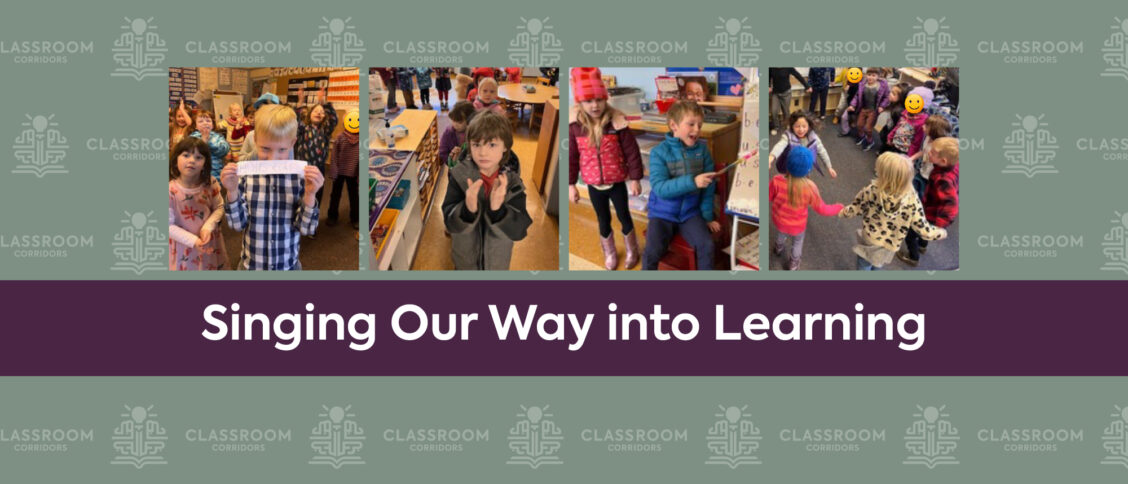

Singing is a constant in my classroom. We sing about the weather, the days of the week, and how we want to be together. We sing about vowels, counting by tens, keeping hands to ourselves, and being a community. We sing about where food comes from, emotions, and playground rules, each song stitching learning into the rhythm of our day.
Morning Circle Greeting Song
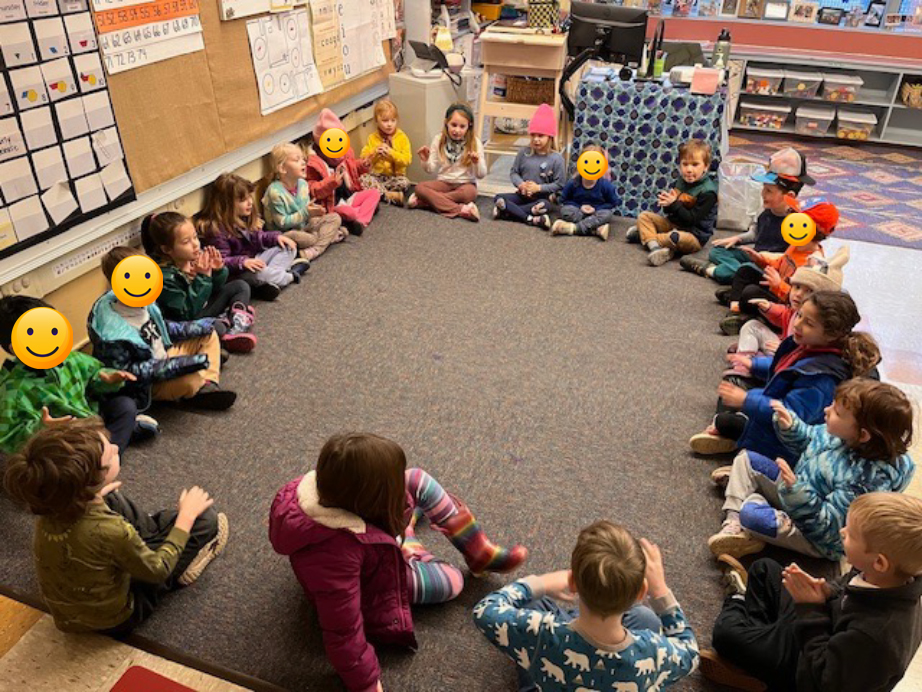
In my kindergarten classroom at Sunnyside Environmental School, learning always begins with a song—not one playing from a speaker or a screen, but one we make together. Each morning, I sing a familiar song that signals to the children that it is time to put their books away and move to the carpet in a circle.
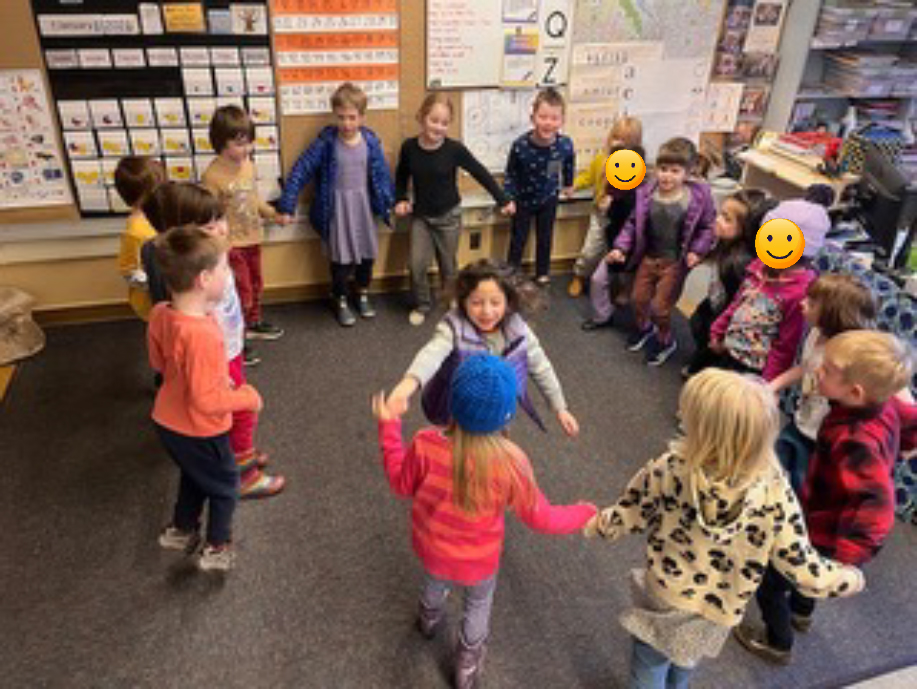
With the prompt woven into the lyrics, their response is immediate and instinctive. Our voices rise, hands move, feet tap, and suddenly 23 five- and six-year-olds are synchronized in breath, rhythm, and purpose as we seamlessly move into our greeting song. This daily practice brings us together as one focused community and sets a calm, attentive tone for the day. In a world where digital devices increasingly dominate classrooms, singing offers us something radical: a fully embodied form of learning. At Sunnyside, a K–8 focus-option school rooted in place-based, justice-centered education, song is not an “extra.” It is a core literacy practice that builds community, supports memory, and invites every child into learning, regardless of reading level, language background, or attention span.
Teacher-Led Transition Songs
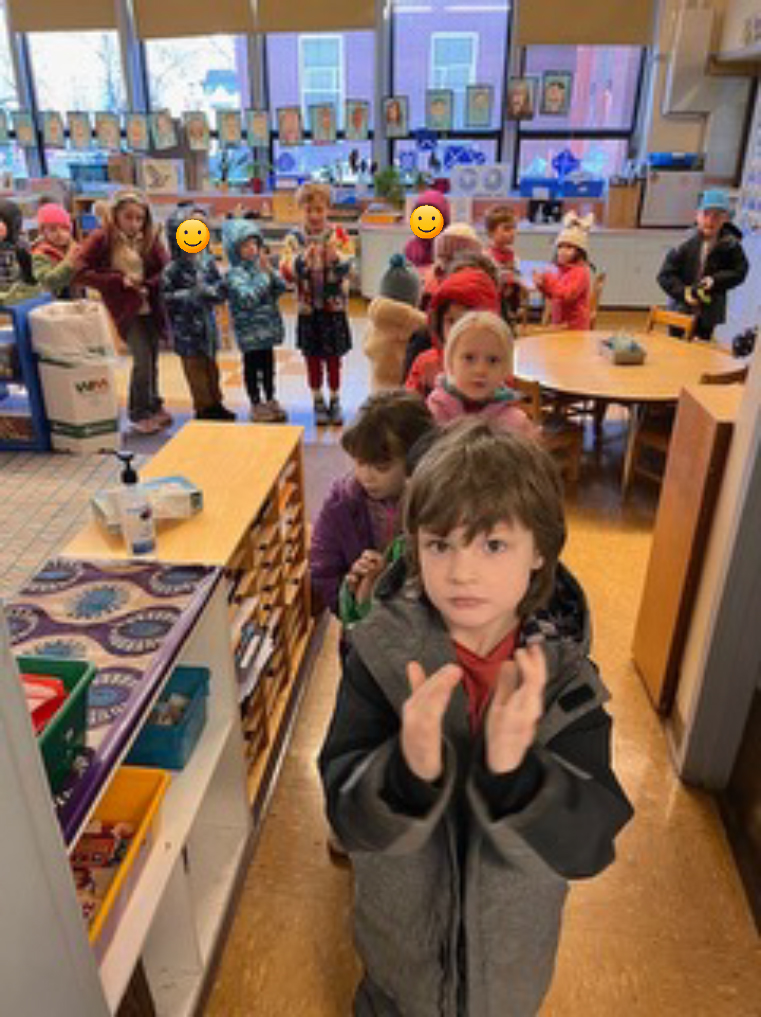
I use singing to help us transition from one activity to another. We sing to clean up, and we sing to breathe together after recess. A simple clean-up song, sung in the same calm tempo each day, signals hands to move and bodies to organize without urgency. After recess, we hum a slow, steady melody while taking three deep breaths together, allowing heart rates to settle before learning resumes.
These songs act as bridges between activities, feelings, and children. Instead of verbal reminders or visual timers on a screen, a familiar melody cues the brain and body at once. A short “walking song” helps students line up and move through the hallway with intention. A quiet transition tune lets children know it’s time to shift from play to focused work. The rhythm tells students what’s coming next. The shared experience creates calm.
For my students, especially those still developing language or self-regulation skills, song provides predictability and safety. They don’t need to read instructions or interpret abstract directions. They feel what to do next.
ABC Phonics Song
I sing to teach academic content. I sing when energy is high and when it’s low. We sing to remember letter sounds, to practice counting by fives and tens, to remember the days of the week, and to name emotions. One of the most powerful aspects of singing is how naturally it supports multimodal learning. When we sing, children are listening, speaking, moving, and often touching materials all at once. This kind of multisensory engagement strengthens neural pathways and deepens understanding.
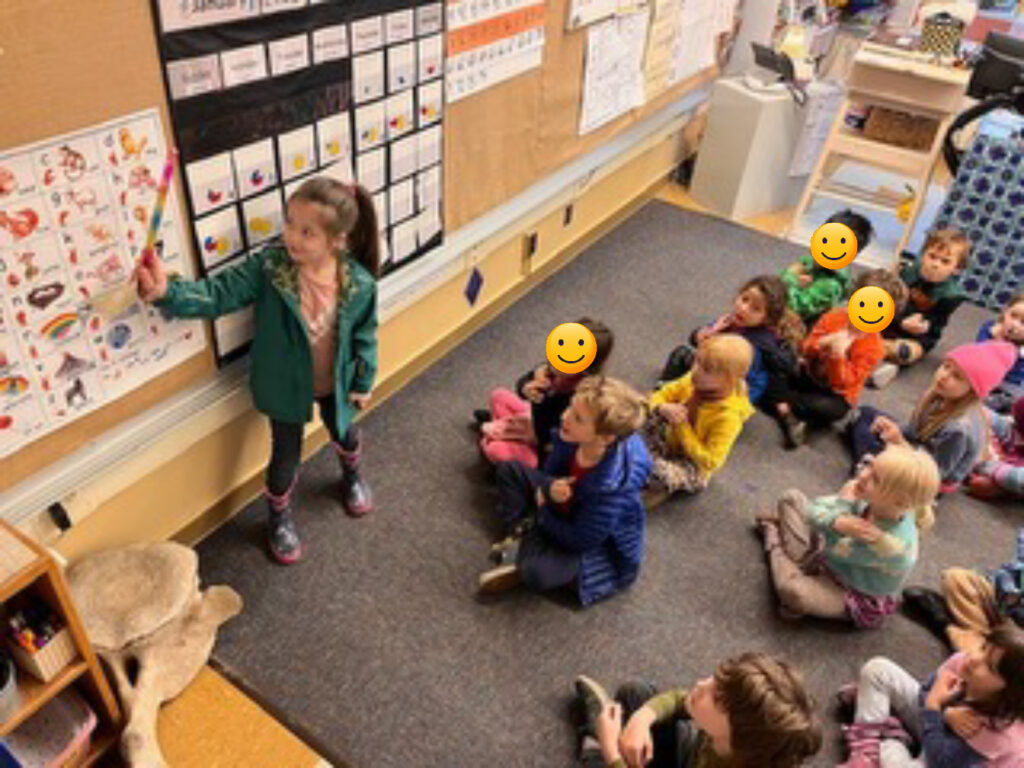
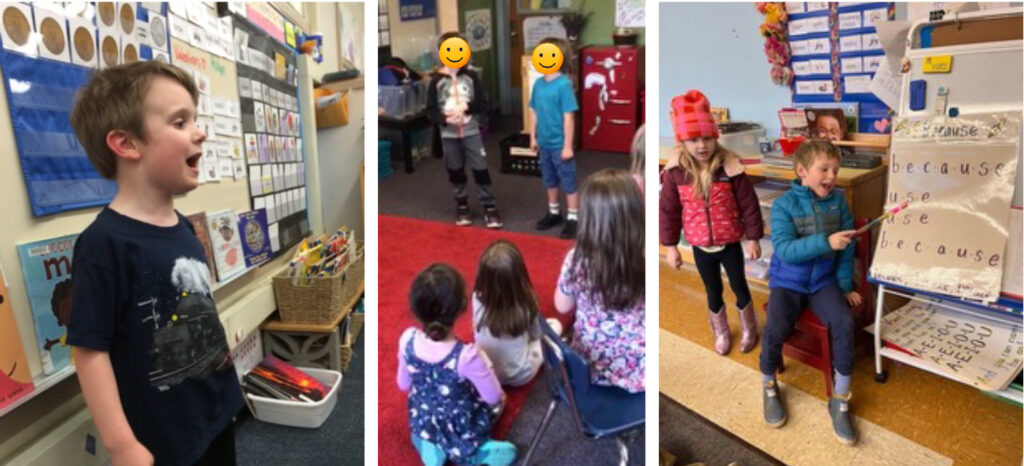
During phonics lessons, we pair songs with hand motions, sign language, and tactile objects like wooden letters and stones and acorns collected from the playground. Children trace letters in the air as they sing their sounds. They clap syllables. They stomp rhymes into the carpet. Literacy becomes something they do, not something they watch.
This approach aligns with Sunnyside’s mission to create a rich, place-based learning environment. Our curriculum values the local, the embodied, and the relational. Singing fits naturally into that philosophy. It is ancient, communal, and deeply human.
Singing on Neighborhood Walk
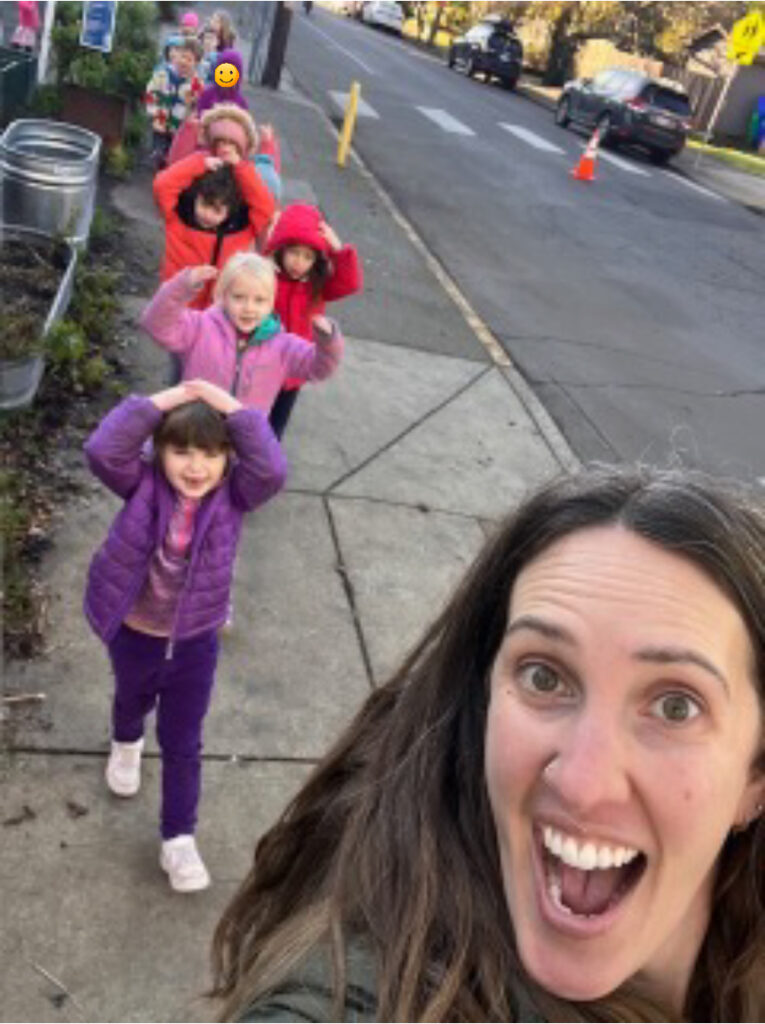
Because learning often happens beyond classroom walls, our songs travel with us. We sing walking songs on neighborhood field studies, and we sing observation songs in the garden.
These moments reinforce that learning is not confined to desks or devices. The city’s wild and urban spaces become classrooms, and song becomes a tool for noticing, remembering, and reflecting. Children learn content and also learn that their voices matter in shared public spaces.
When Singing Becomes Dancing
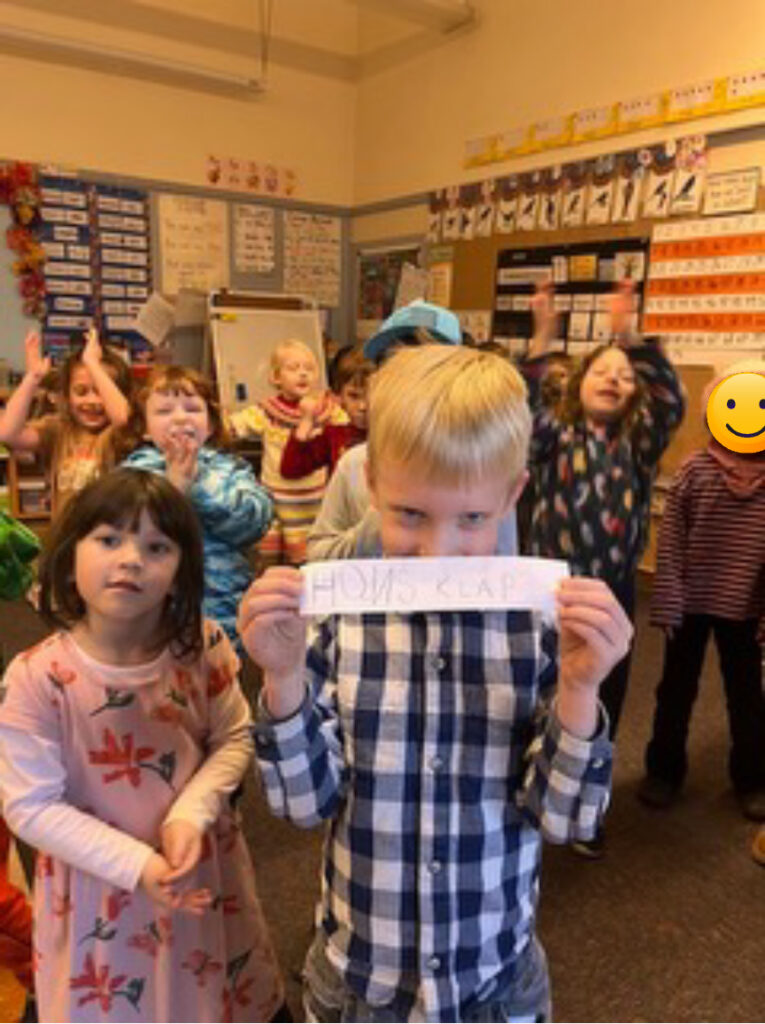
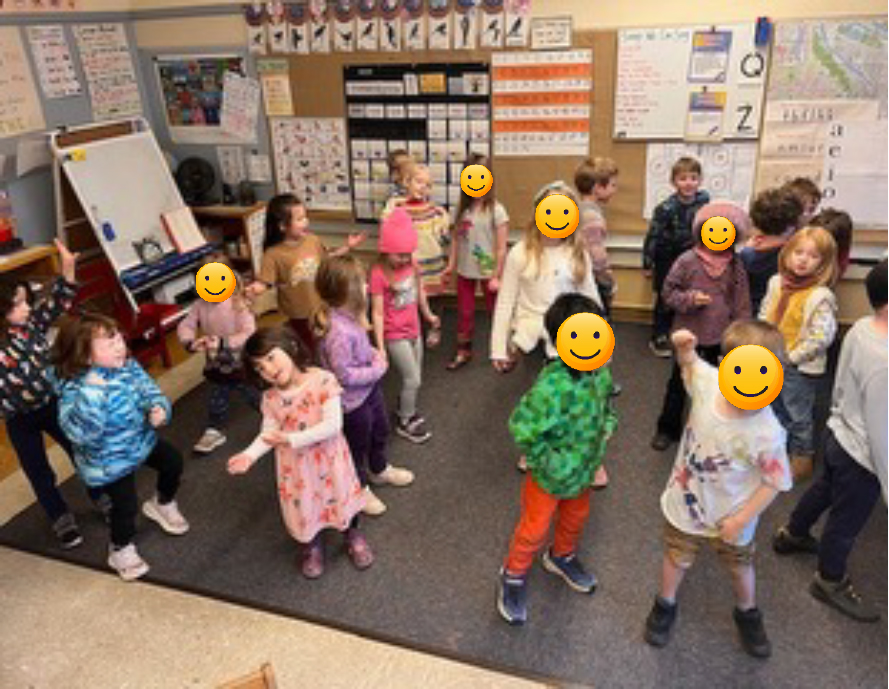
Every afternoon in our classroom, we have a dance party. It is not a reward, and it is not structured by an adult-curated playlist. It is child-centered by design. The students choose the song, and when the music begins, the room transforms.
Voices belt lyrics with abandon. Bodies move in every possible way—jumping, swaying, collapsing into laughter. Some children dance together, others alone. The carpet becomes a shared stage, and joy becomes the curriculum.
A key part of this ritual is our song request box. It lives in the classroom and is always accessible. Students can add song requests at any time by writing the title themselves, drawing a picture, or asking for help to record their song title. Often, they ask for help from a peer rather than from me. Each day, I choose one song from the box.
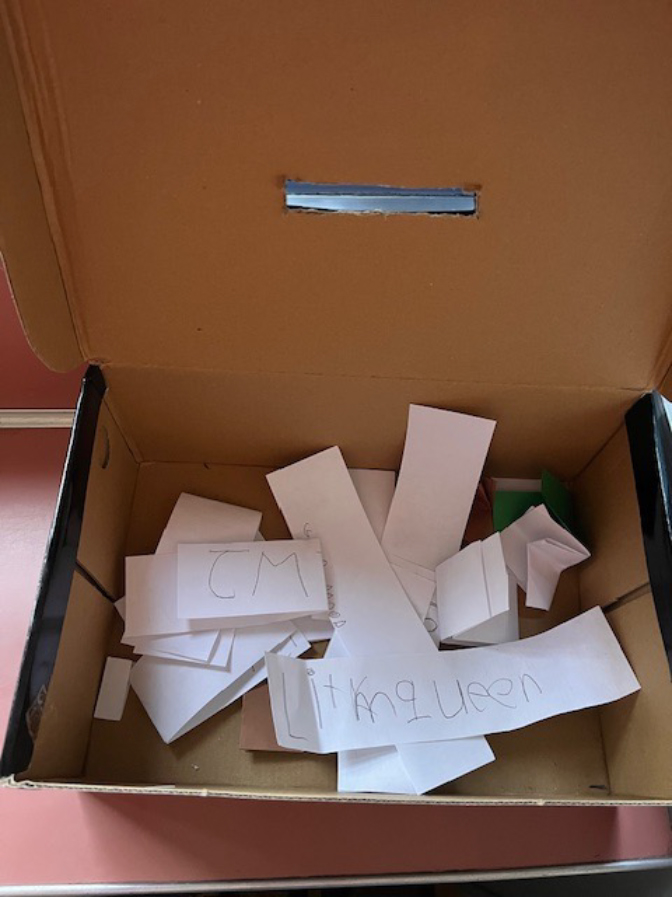
The box has become one of our most powerful motivators for literacy. My most reluctant writers write willingly when the purpose is clear and meaningful. They sound out words, take risks with spelling, and persist through frustration because they are invested in being heard. Writing becomes an act of participation, not compliance.
Just as importantly, the song request box teaches patience, flexibility, and teamwork. Students learn that it’s okay to feel disappointed when their song isn’t chosen and that disappointment doesn’t mean exclusion. They trust that their turn will come. Over time, they practice celebrating others’ choices, regulating big feelings, and understanding that community requires waiting, sharing, and generosity. At the end of the day, there is always a dance party, and everyone has fun!
This daily ritual is more than a break from academics. It is academic learning. Dancing while singing engages rhythm, language, memory, coordination, and emotional expression simultaneously. Children practice following rules they helped create, negotiating turns, and respecting each other’s choices. They learn that their preferences matter and that their classroom is a space where their full selves are welcome.
In a school culture committed to justice, equity, and belonging, giving children ownership over music matters. It disrupts adult-centered norms and affirms that learning communities thrive when students’ voices lead. No screens are needed to captivate attention, only trust, movement, and sound.
A Child Performs a Song for Their Peers
One student comes to mind when I think about the power of songs.
At the start of the year, this child rarely spoke in whole-group settings. During discussions, they stayed quiet. But when we sang, their voice emerged, soft at first, then stronger. The melody gave them an entry point that spoken language alone had not.
As the year continues, that confidence is carrying over. They have begun volunteering their thinking. They initiate songs with classmates during play. Music became a bridge, not just to academic content, but to belonging.
This is the quiet magic of song. It allows students to participate fully before they are “ready” by traditional academic measures.
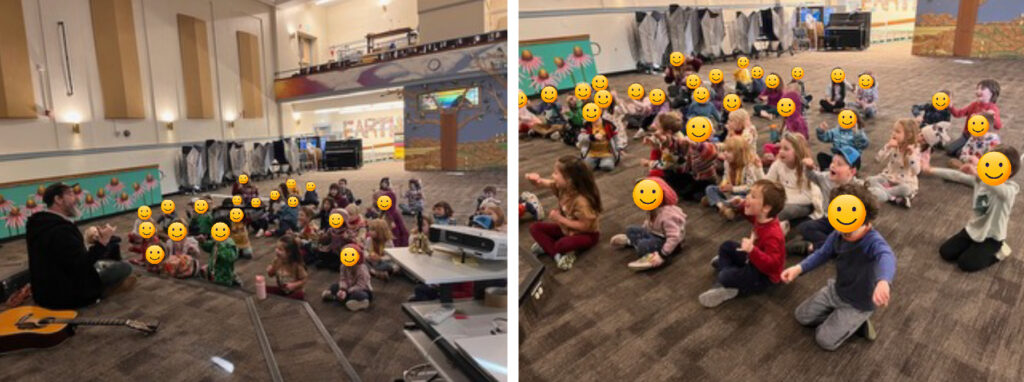
Music Class with Mo
Music at Sunnyside is not just something children consume, it is something they create.
As part of our music program, students collaborate to write original lyrics and songs. They brainstorm ideas, negotiate language, and experiment with rhythm and rhyme. Literacy lives in stories, humor, revision, and shared imagination.
This year, our kindergarteners and first graders went even further. Together, they co-wrote an entire musical.
Guided by our music teacher, Mo Philips, students shaped the story, composed lyrics, and brought characters to life through song. The process honored their ideas while teaching them narrative structure, collaboration, and the power of collective voice.
K–1 Musical Performance
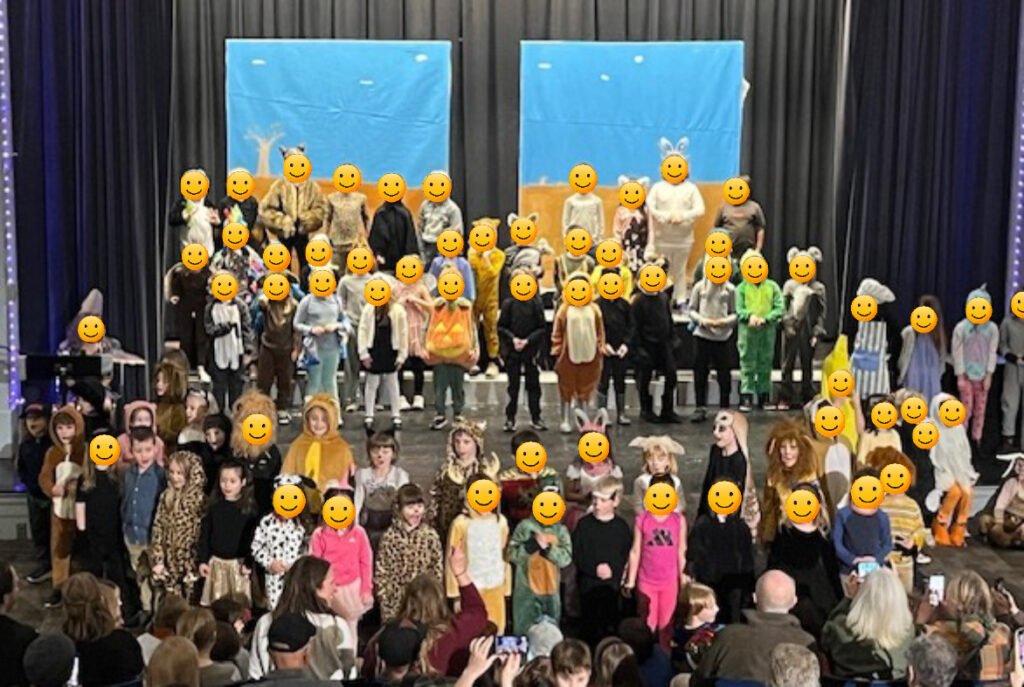
The musical culminated in a performance for families, peers, and the greater school community. Standing together onstage in costume, the children sang words they had written themselves. Their pride was unmistakable.
For many students, this was a defining moment: I made this. I’m nervous, but I’m also so proud. My voice matters. People are listening.
That confidence carried long after the final song. Children continue to reference the musical during play. They sing pieces of it during transitions. The experience has deepened their sense of belonging, not just to their classroom, but to the larger Sunnyside community.
This is multimodal learning at its fullest. It is literacy through voice, movement, collaboration, and courage.
The script for Hunt For The Legendary Pizza Shop is linked here.
Recordings of the songs are linked here.
Music Beyond Kindergarten
This commitment to music as a core literacy practice does not end in early childhood. At Sunnyside, music continues to shape learning as students grow.
In middle school, music shows up in many forms. It is woven into all-middle-school Friday morning meetings, where shared songs continue to build community across ages. In songwriting classes with our middle schoolers, students collaborate to write original music together, learning how to share ideas, say yes to one another, and honor the very real, sometimes messy process of creation. They are encouraged to be playful while also embracing the vulnerability that comes with singing alongside classmates during one of the most socially tender times of their lives.
Music also supports students when the learning turns inward. During deeply personal or emotionally complex writing, students are sometimes invited to listen to music through headphones as they write. Students write with greater depth and honesty, and they are more willing to share what they’ve created with one another. Music creates a container for risk-taking. It softens the edges of vulnerability and helps students access feelings and stories that might otherwise remain unspoken.
Across grade levels, music proves itself again and again as a powerful tool for connection, expression, and courage. It helps students lean in, not pull away.
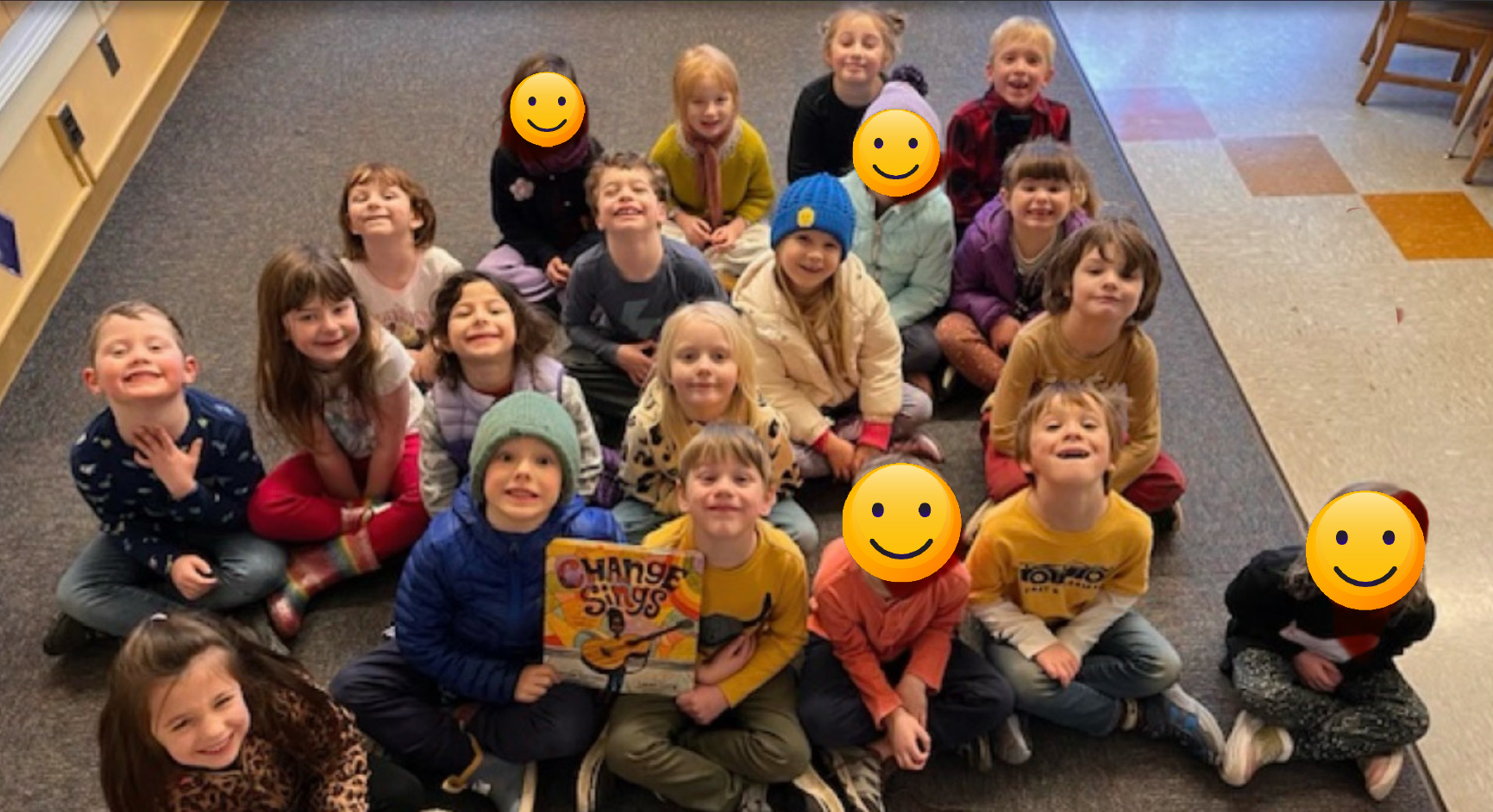
Whole Class Community
From kindergarten through middle school, music becomes a throughline, reminding us that as children grow, their need for voice, connection, and embodied ways of learning does not fade, it deepens. At Sunnyside Environmental School, we aim to empower students to become environmentally, socially, emotionally, racially, and academically literate and to take action for a more just world. That work begins with connection and community.
Singing, dancing, and songwriting are some of the simplest, most accessible tools I know for building that connection. No login required. No batteries needed.
In moving away from screens and back toward song, play, and tactile learning, we aren’t stepping backward, we’re returning to something essential. We’re remembering that learning is something we experience together, with our whole selves.