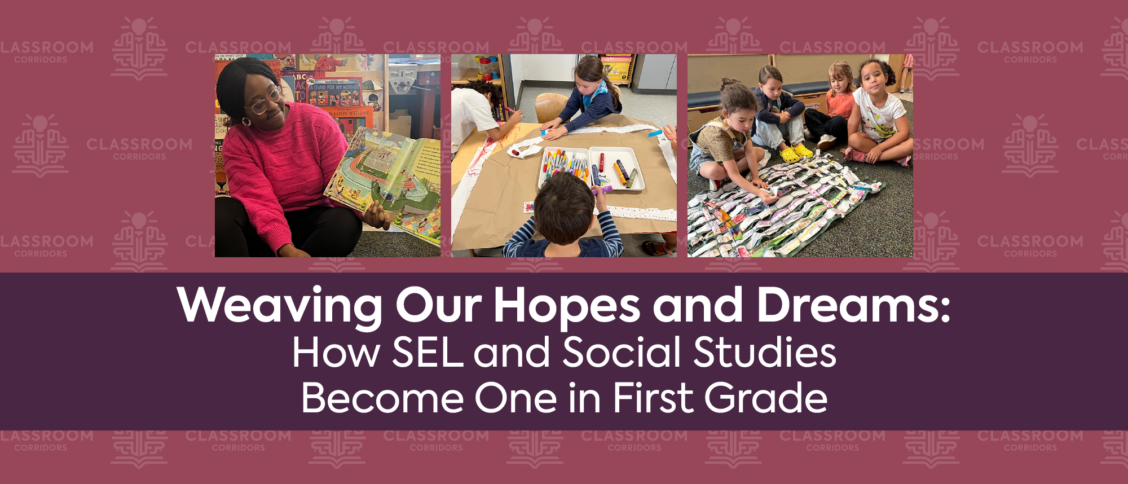

In my first-grade classroom, social studies doesn’t start with maps or faraway places. It doesn’t start with a unit or a textbook. It starts with us. Social studies in early childhood is the foundational introduction to people, communities, and society, and that is exactly what the beginning of the year is. An introduction.
Before six-year-olds can study a community, they have to become one, and that takes real social-emotional work. In the early grades, social studies and social-emotional learning are not two separate things. They are intertwined. There’s a developmental idea underneath this intertwining that early childhood teachers will recognize: the “going out” piece—children moving out of themselves toward something bigger. That move is a social studies concept and a social-emotional one at the same time. Learning that you are part of something larger than yourself is how a child begins to understand community, and it is how a child begins to grow. The two are not separate. In the early grades, they are the same work.
Hopes and Dreams, from the Responsive Classroom framework, is a practice where children name what they want to learn and become over the year. Naming a hope means looking inward and daring to believe you can grow. That is hopeful work. Turning that hope into words, being clear with yourself about what you actually want, is honest work. And saying it out loud to your community, at six years old, is brave. Not every school uses this framework in the same way, but the idea underneath it is universal: When a child names a goal out loud and sees it honored, they feel like a real member of the classroom, someone whose wants and needs matter here. It sets the tone that this room belongs to all of us. Every class and every grade does it differently. In my first-grade classroom, it looks like this.
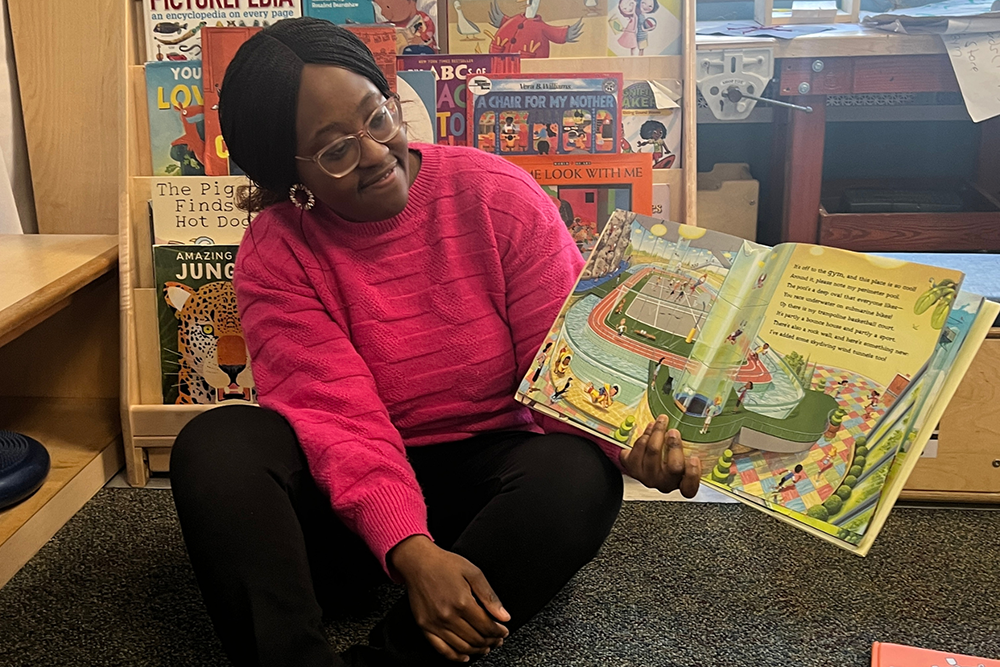
As a classroom community, we talk about hopes and dreams for a week. We read mentor texts. Teachers model their own hopes first, and the children think about hopes they’ve had at home. It is part of building our routines, and building routines is social-emotional work at its core. A routine is not really a procedure. It is an agreement about how we will be together in this room for the next 160 or so days, practiced until it becomes ordinary.
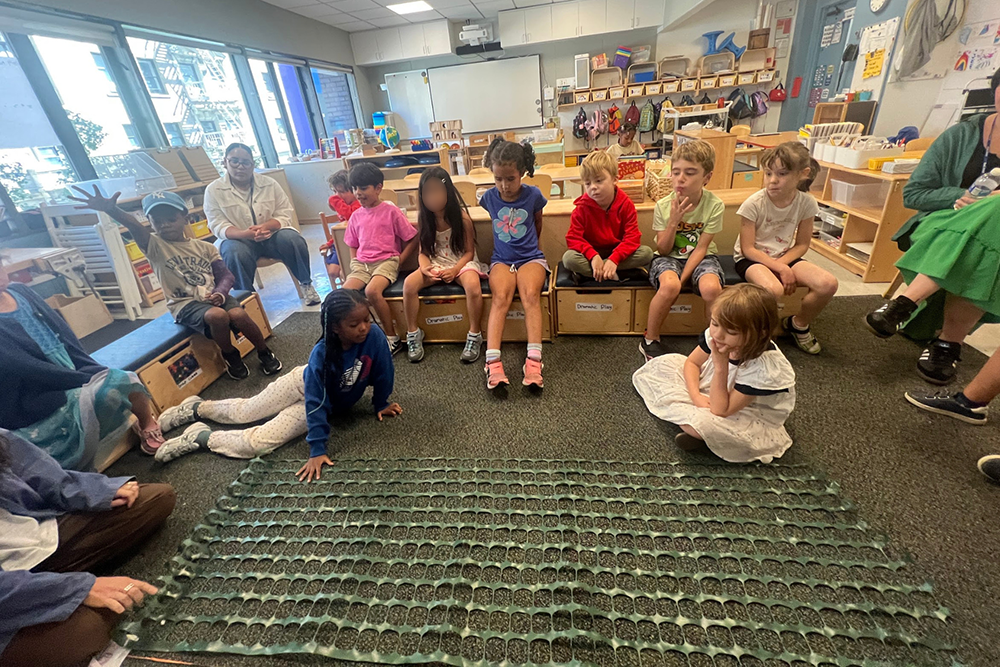
The children move through several hopes before landing on one, then say it in front of everyone. And the rest of the class listens. No hope is bigger than another, and sometimes one child’s hope becomes another child’s chance to help. A week of talking about hopes and dreams leads us here. Now each child’s dream is ready to be woven into the others.
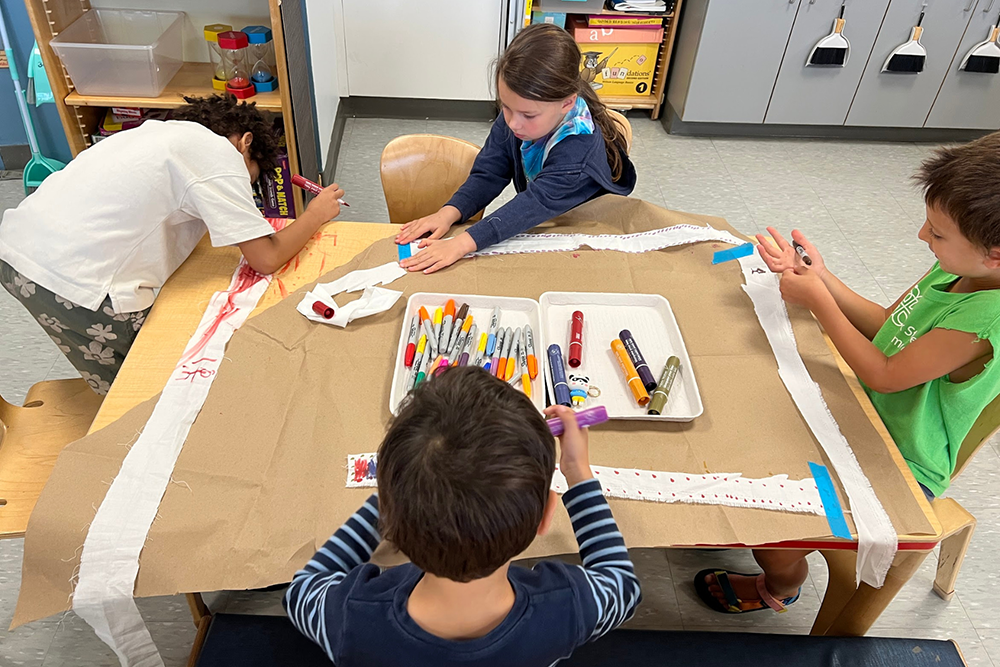
Everyone gets a strip, and every hope goes down in a child’s own hand. One child wants to jump to the fourth monkey bar. One wants to draw at school. One wants to do magic and to write. Some hopes are about the monkey bars. Some are about learning to read. All of them are big, beautiful, and true.
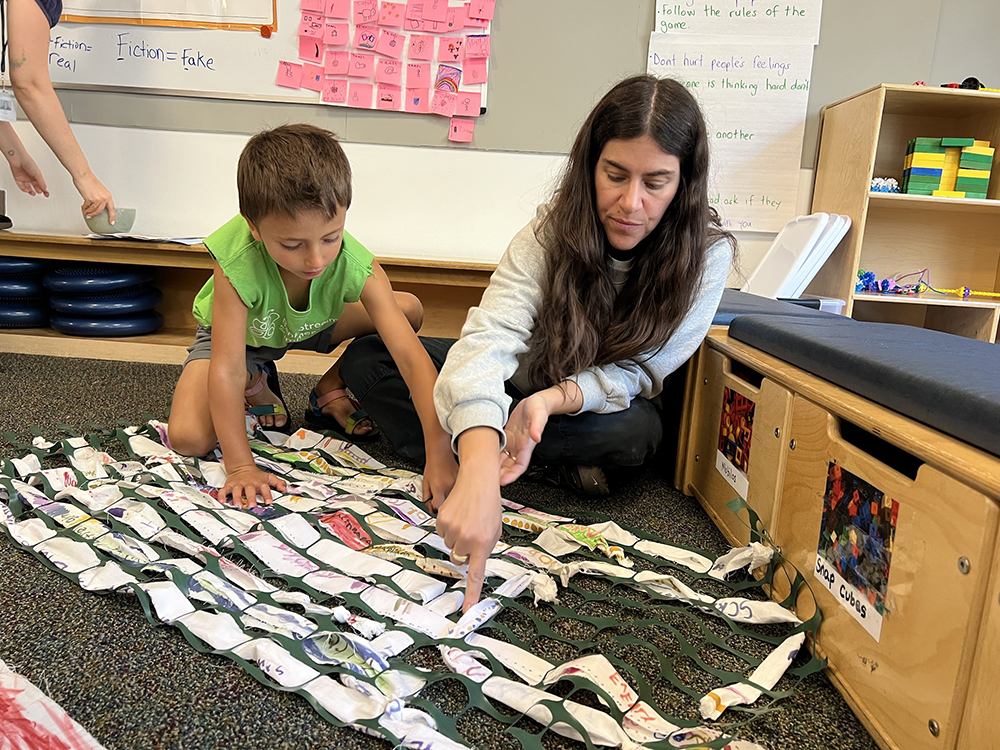
Our art teacher teaches the children to weave: over, under, over, under, a knot to hold each strip in place. The activity integrates writing and art, but the deeper integration is this: the technique is the lesson. Each strip is held in place by the strips around it. A child saying a hope out loud is doing the same thing the fabric is doing, trusting that the community will hold them. The loom physically holds each individual strip, just as the room holds each individual child and will continue to do so for the rest of the year. Two questions live in the same act here: How do we depend on one another, and can I hold this group even as it holds me? The weaving answers both, the social studies and the social-emotional, at once.
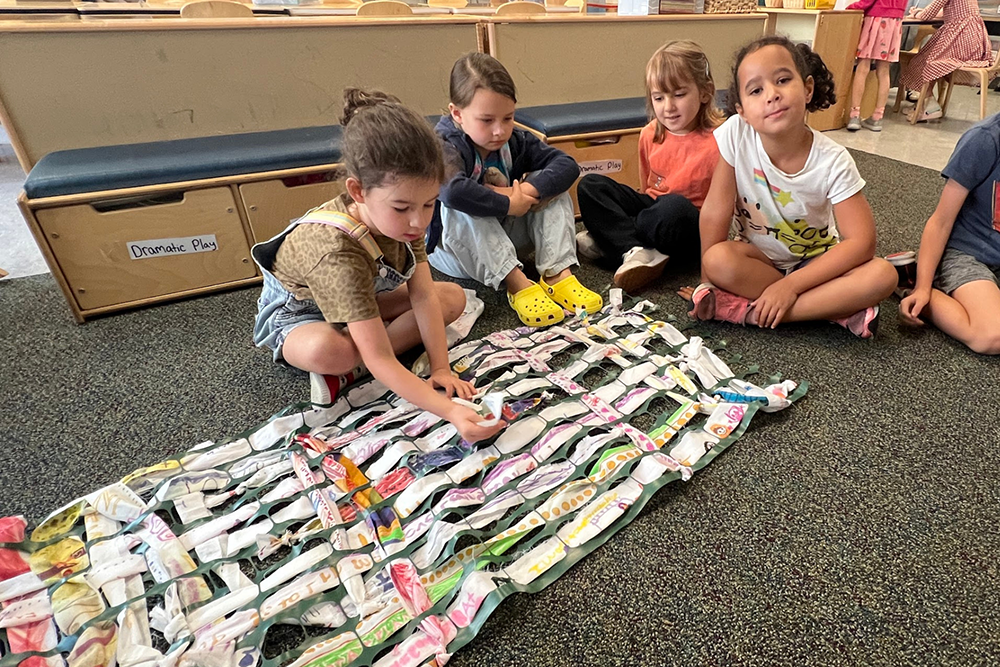
By the end, the loom holds every child’s hope in one piece. You can find your own strip, and you can see it holding up everyone else’s. We hang it in our meeting area, above the rug where we gather every morning. All year, the community they built looks down on the community they are becoming.
This is what September looks like in first grade. Not a unit about community, but the daily work of becoming one. We build our own community before we study any larger one, and we hold each other while we do.
At the end of the year, we take the loom down. Strip by strip, we ask: Did your hope come true? Some do. Some don’t. Whatever the outcome, we celebrate. We talk about how a dream can carry into second grade and beyond, how you can keep working on it if it didn’t happen, how a dream that half came true is still real, how dreams change and grow. Your dreams are not bound by an age band. That is how the year closes in our room.
How you help your children become a community, how SEL and social studies come to life in your room, is your own. The loom is just one way in.