


Imaginative, engaging, captivating, exciting. These are all words to describe how I felt about writing growing up. As an elementary student, writing was my favorite school subject—a place to escape and be creative. Developing characters, writing about my interests, and researching fascinating topics were exciting to me as a young writer. However, as I began teaching writing to students in my own classroom only two years ago, I noticed a lack of confidence and motivation for writing. I wanted to cultivate the same passion for writing in my students that I had growing up. In this article, I will reflect on strategies used by my writing teachers in the past that have influenced my writing style and teaching pedagogy for writing in my own second-grade classroom.
Throughout several of my elementary school years, I was blessed to be taught by amazing teachers who instilled in me a love of writing that I now seek to transfer to my own students. When thinking back on my time in their classrooms, something I remember all of my writing teachers having in common was an emphasis on storytelling. I can remember laughing and hanging onto every word as my third-grade teacher told us stories about her crazy cat named Calvin. As a young and shy writer, my teacher’s storytelling inspired my love of writing realistic fiction. I would take events from my own life and mask them behind a made-up character, which felt more comfortable to me than writing in narrative form. In my own classroom, I tell stories about my own life to inspire my students to write about things happening to them in real time. No matter the genre, I’ve found that students are motivated to write about what they know.
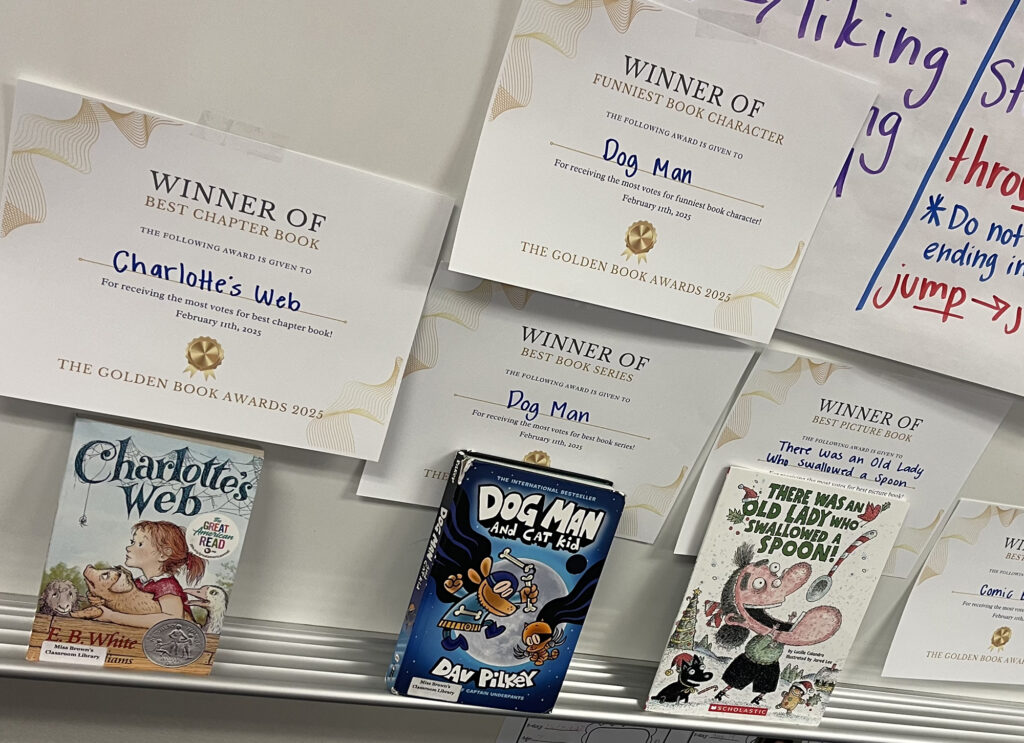
My writing teachers in the past also taught me that reading and writing go hand in hand. I remember crying when fictional characters met their end or celebrating when a character overcame their bully; the characters truly felt real to me. A quote I take to heart is “When you read aloud, you don’t just read the words, you perform the text, and these performances are always teaching students about writing” (Ray & Villalba, 2025, p. 55). Several books that my teachers read aloud to me inspired my love of fiction writing, and these are books that I now read to my own students. For my students and me, read-aloud time is always our favorite part of the day; as a class unit, we feel connected to the characters. This past school year, my team and I taught students about opinion writing by having them write letters nominating some of their favorite books for awards. The books with the most votes received a “Golden Book Award.” This allowed the students to be engaged and connect reading with writing. Just as my teachers did for me, I also use class read-aloud books to create shared writing pieces or writing prompts that engage my students.
As I began teaching writing to my second graders, I noticed that some of them had more difficulty than others coming up with ideas of what to write about. Reflecting on my writing teachers in the past, I remember having such a strong, personal relationship with each of them. I knew so much about them—their families, lives, kids, and pets—and I felt like they truly took time getting to know me. According to Wondrous Words, “Each interaction with a student has the possibility of affecting in wonderful ways their disposition toward learning” (Ray & Villalba, 2025, p.34). I use the little moments during the day to talk with my students and hear about their lives. I’ll take note of games they like to play at recess, or recent trips they’ve been on. They feel seen when I bring up things I’ve remembered about them, and this leads to relationship building and further strengthening of their trust in me as their writing teacher. If I know them and their interests, I can draw them back to the things that are happening in their lives to give them a place to start in their writing.
Another thing I always looked forward to as a student was writing conferences. I can remember waiting with hopeful anticipation for my writing teacher to call my name for my one-on-one time. Their praise would boost my confidence, and their feedback would motivate me to perfect my writing. My sixth-grade writing teacher Tracy Cole says, “Writers know that I’m right beside them supporting them in some way, whether it’s supporting words, mentor text, or my own writing. The importance of being right beside them builds trust, so they are open to taking more risks in trying something new.” Building trust with students through conferencing is an essential practice in my classroom. I tell my students that we are looking at their writing as a team. This allows me to point out areas of improvement while still having them take the lead on how to make parts of their writing better. After this time, they are empowered with the tools needed to edit and revise their writing independently.
Above all, my past writing teachers sought to celebrate each individual student’s accomplishments and give praise for hard work. My fourth-grade teacher would choose specific paragraphs or lines from a student’s work and show it to the class as an example. This is another practice that has become essential in my teaching. If I notice a student has added in good details or is using a strategy that was taught in their own work, I will read it aloud to the class with their permission. This gives other students an example of their peers and allows the student whose work is displayed to feel praised for a job well done.
The impact that my elementary school writing teachers had on me led to a lifelong love of writing that I seek to transfer to my own students. Intentional teachers have the most impact on their students, and as someone who had several of these teachers in my life, I know my passion for intentional teaching is a direct product of this. A teacher’s role as their students’ biggest encourager is arguably the most important of all. If a teacher first believes in a child as a writer, the child can learn to believe in themselves.
References
Ray, K.W. & Villalba, S. (2025). Wondrous words: Reimagining writers and writing in the elementary classroom. National Council of Teachers of English.


