


It’s important for children to understand that the purpose of writing is to communicate in some way with a reader—to write for a real audience. However, even if we’re writing every day, and writing to publish and share pieces with classmates, teachers, and administrators (all within the school building), students often miss one critical understanding about writing: the power that their voices and their writing can have beyond the classroom and the school.
Students need opportunities for their writing to go forward and go public—to reach audiences outside the classroom and the school—so they can begin to see how their words truly affect the feelings, the beliefs, and the choices of people in the community, state, nation, and world. The out-in-the-world writing doesn’t have to be writing on a grand scale. A simple thank you note to a guest speaker, a letter to a friend, or an invitation to a party are small but important ways to make sure students recognize the power of their words beyond their writing workshop folder at school. Not only are children far more capable than we could ever imagine, but you’ll find their most passionate and powerful writing comes when they know it will go beyond the unit of study or the written response to a school assignment. In this article you’ll find a few ways to give students opportunities to share their voices and their views in writing-beyond the classroom, through the front doors of the school, and out into the world.
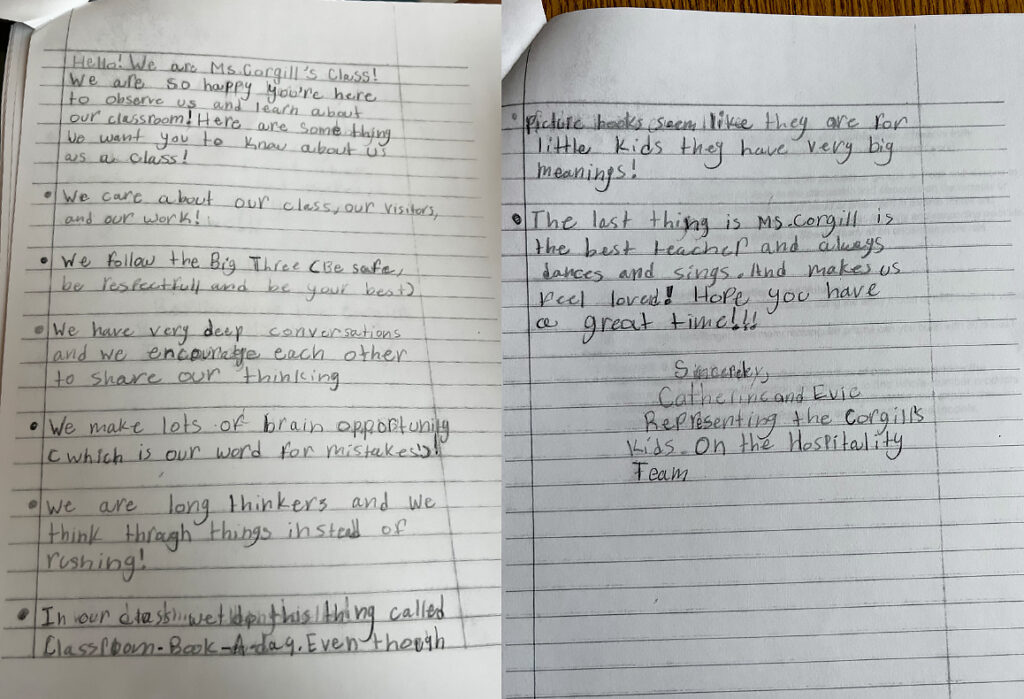
“Who Are We?” Letter to Guests and Visitors to Our Classroom
This is a letter that is co-created by all students in the classroom but edited and published by two members of our classroom “Hospitality Team.” The letter is designed to give guests and visitors to our classroom a glimpse into who we are as people and as learners. If colleagues or administrators are visiting the room for an observation, the letter is attached to daily goals or a standards focus for the lesson/work they are observing. This letter ensures that visitors don’t just see the work, they learn about the people who inhabit the space and the values we collectively possess.
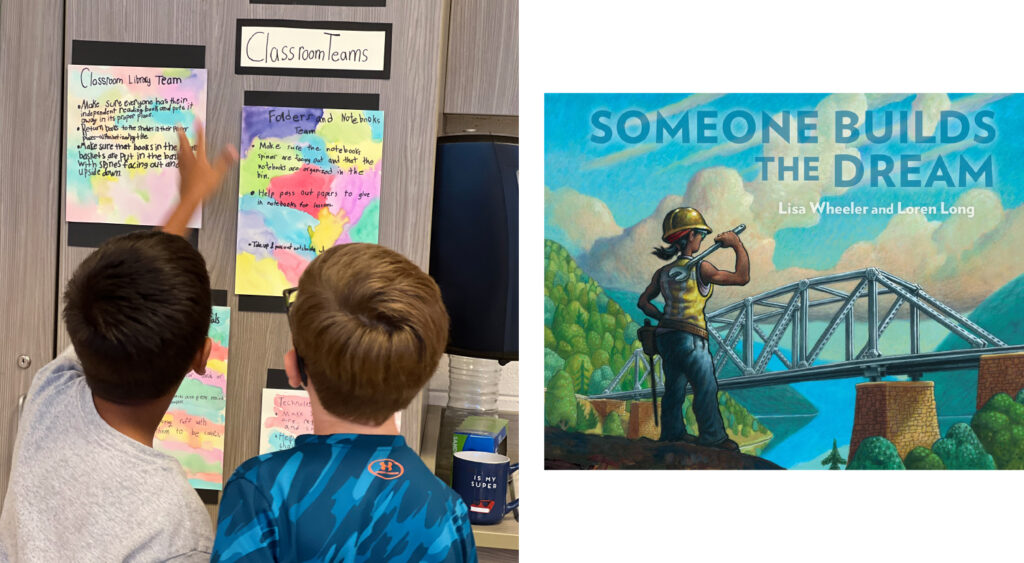
Classroom Teams: Classroom Job Descriptions
In our classroom this past year, students recognized after reading Someone Builds the Dream by Lisa Wheeler and Loren Long that, more often than not, it takes a community to fulfill a dream or a project purpose. From this discussion students decided to create classroom teams and write job descriptions—not just for our classroom community but to teach others outside our classroom about the importance of working together to make big things happen. Teams change every two weeks, and the previous team teaches the new team about the specific responsibilities. It’s powerful when the students write their own job descriptions (with a watercolor touch to add beauty to the work). Each year the teams are different based on what students believe to be most important in building our classroom dreams together.
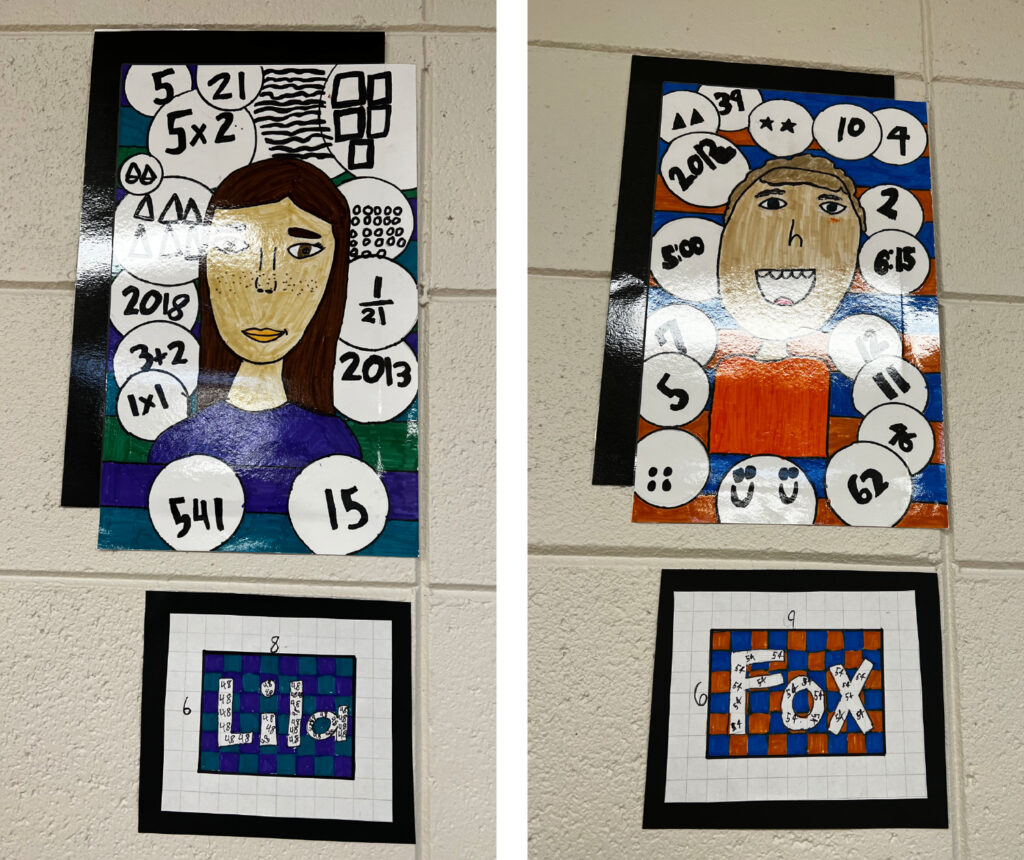
Self-Portraits with a Mathematical Focus: Our Identities in Numbers and Poems
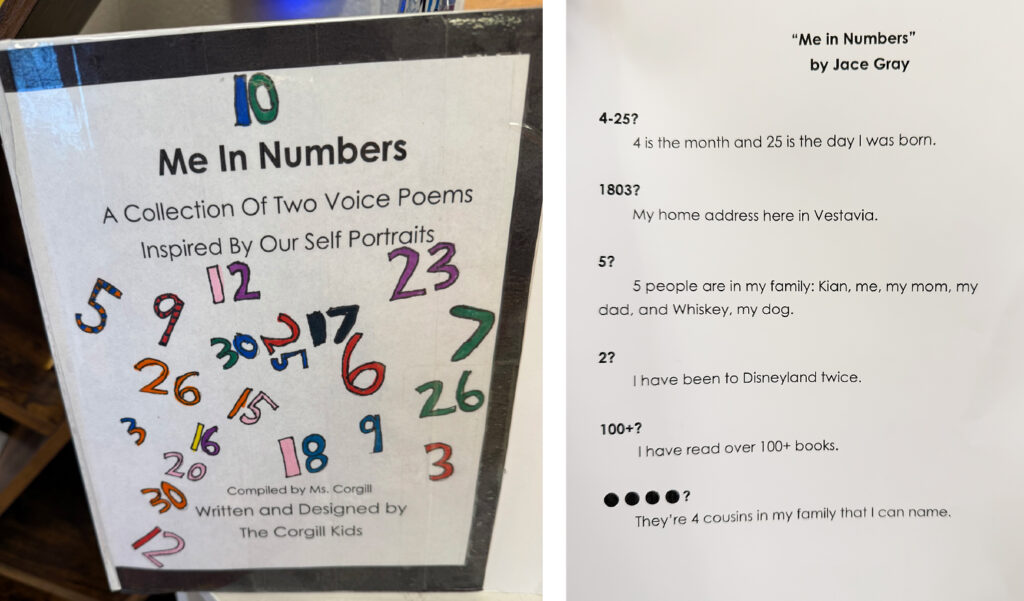
Every year students create self-portrait collages in my classroom, but this particular year, we decided to create portraits with a math focus. Each number around the border of the student’s self-portrait represented something special about that person—maybe a birthdate, the number of siblings in the family, the number of moves the family made, favorite holiday dates, etc. We then used an array model to design the name of the student; students chose favorite numbers with specific, personal meanings to create the multiplication array. After all students finished their own self-portraits, each child wrote a “two voice poem,” and we titled our anthology Me in Numbers to share with parents and visitors.
Bare Books: Publishing with “Real” Books to Donate to the Library
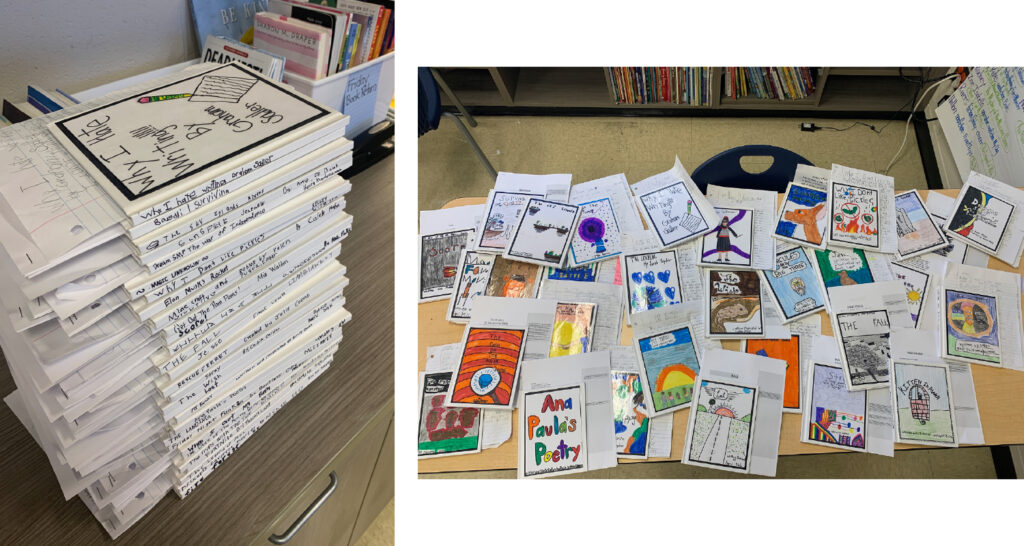
There’s just something about a hardback book . . . and when I first discovered Bare Books (barebooks.com), I soon realized that when I put a blank hardback book in the hands of a young writer, something magical happened. Something that feels like possibility and makes a writer or an artist say, “I can do this. I’m going to write and illustrate my very own book and publish it!” And that’s what we do every year. This particular year, after all students published, we donated the books to the library for others to check out, just like the “real” books that already lined the shelves of the library. We didn’t save them for ourselves . . . we multiplied the readership tenfold by simply donating them to the school library for lots and lots of readers to check out and enjoy.
Science Poetry Anthology: Poetry Slam at the Local Coffee Shop
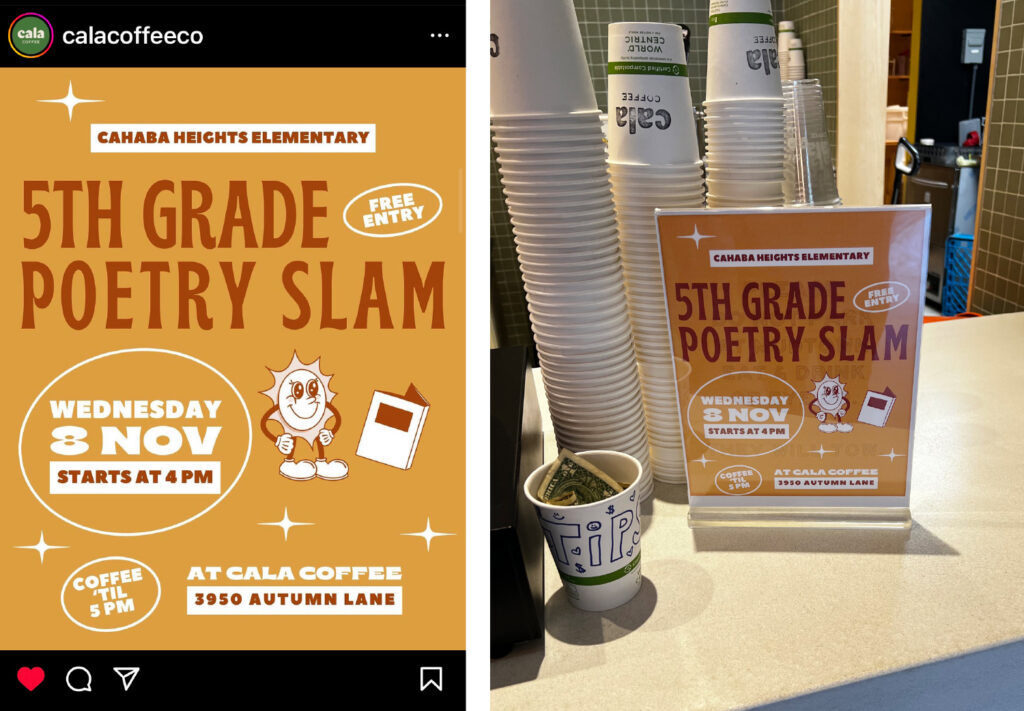
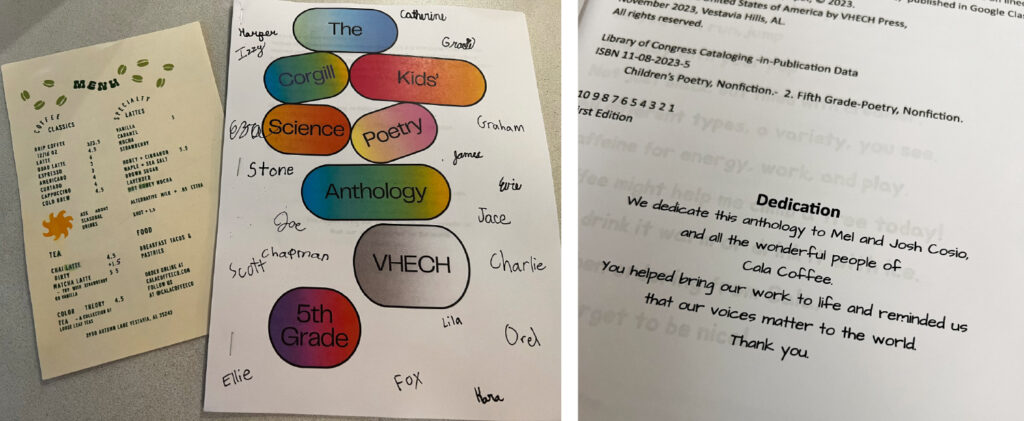
What do you do when you order your science materials kit and it doesn’t arrive on time? You pivot and say to the kids, “Let’s research and write some science poetry!” This year while waiting to begin our first science investigation, we paired our writing passion with the love for a local coffee shop in our community. The amazing owners at Cala Coffee created advertisements on their social media pages and extended hours one day for our fifth-grade poetry slam. All poems in the anthology were science topics, and the community came out in full force to support these writing scientists. It was such a special event, and we dedicated our book to the owners of Cala Coffee. Anytime you can bring kids and the community together and share the voices of young authors, it’s a win-win.
In-Process Celebration: Sharing Our Productive Struggle during the Writing Process
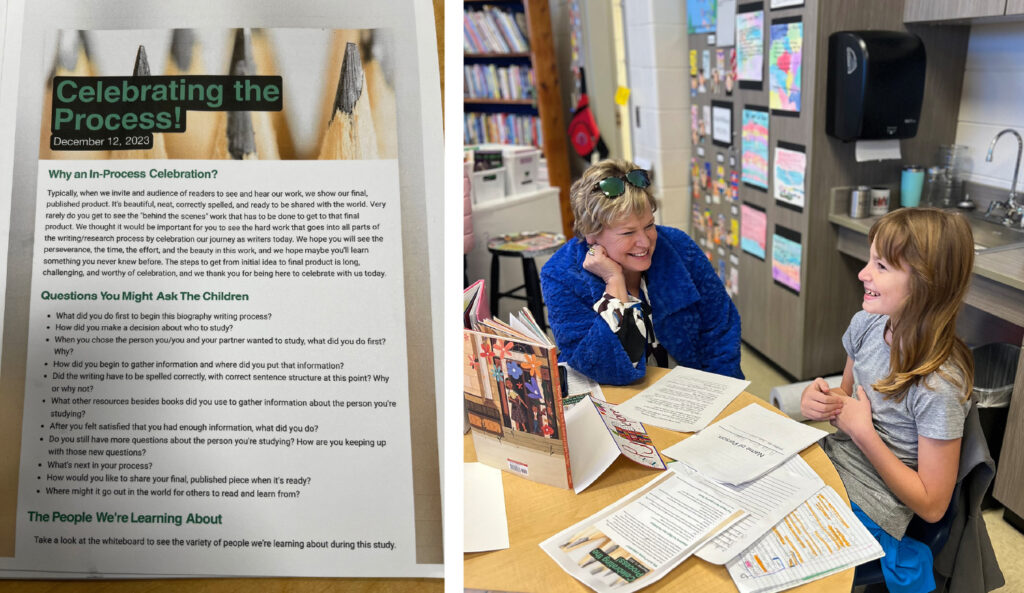
If writing is shared and celebrated with an audience, more often than not we share only the final drafted, correctly spelled, grammar checked, beautifully formatted, well crafted, gorgeously illustrated, published project. However, we all know that there is so. very. much. work that goes into taking a class of writers through the entire writing process. It’s hard work. It’s meaningful work. And it’s the messiness of the work—the drafts, the days of writing, the illustrating, the revising, and the editing—that gets us to that final, beautiful, published piece. A child’s productive struggle and work during the process should be celebrated with an audience! That’s why I now hold “In Process” celebrations, inviting school officials, community members, and families into the room to celebrate all the hard work in the middle of a writing study. The letter shown below is an example of one In Process Study Celebration description I shared with visitors to explain our work during a nonfiction biography study. It’s during this time of celebration that the adults see the authentic, challenging, messy work of young writers and come to appreciate the process even more than if they just got to read and celebrate that final piece of writing.
Ways to Show Love and Gratitude: Valentine Bags, Student Teacher Graduation Celebrations, Goodbye Notes
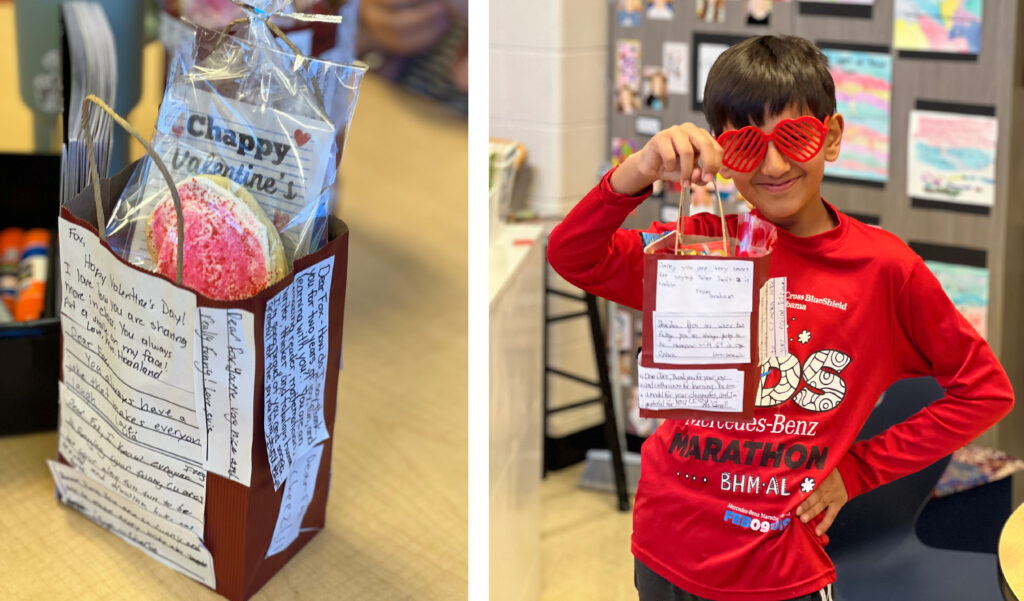
A simple compliment or note of gratitude is one way to keep writing authentic with students. When writing notes like these becomes a natural part of our days in school, it also ensures an even more important goal is reached—that students pay attention to the little things, the moments of joy and connection, and the positive characteristics in their classmates or teachers. Each Valentine’s Day, all the students in my class write “compliment cards” to every classmate, and they decorate their Valentine bags with these notes. It’s a simple way for writing to fill hearts with joy and love.
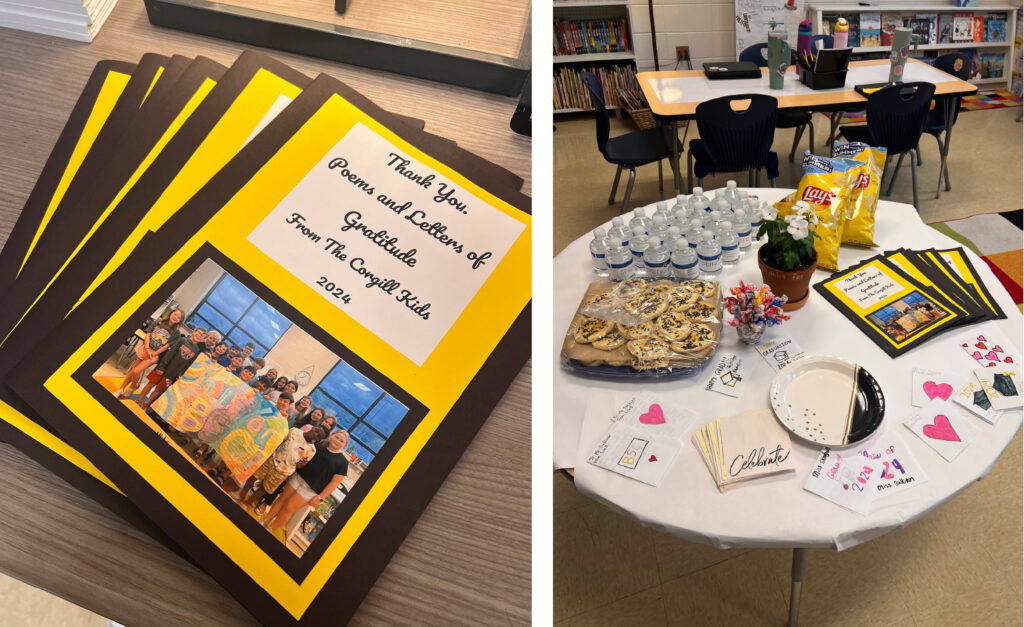
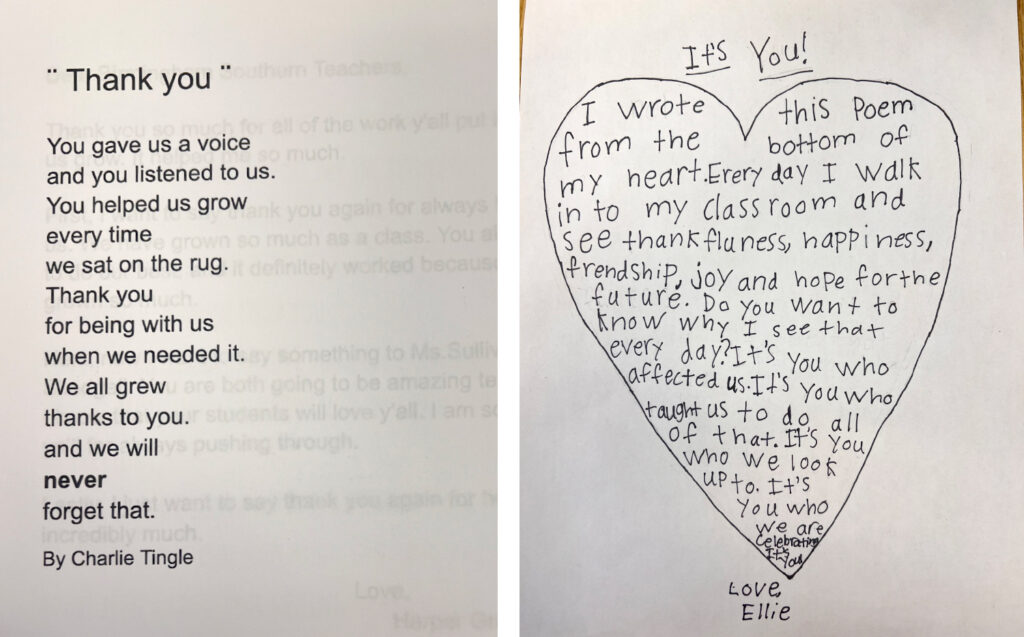
Another way to show gratitude is by making opportunities for student teachers or guests to feel valued. We are fortunate to have amazing student teachers from local colleges and universities work with us each year. To celebrate their graduation and hard work, the kids and I worked on a poetry anthology, filled with poems of gratitude for our two amazing student teachers. It was a gift they will treasure forever.
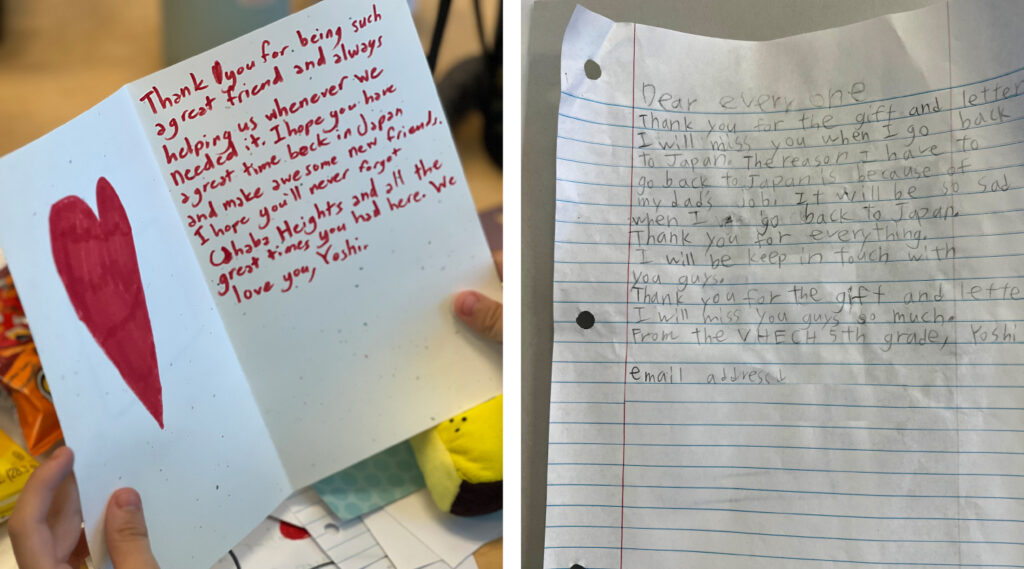
When a classmate moves away, this always becomes a writing opportunity. Students can simply write what’s on their heart and give their classmates written memories of the good times together in school. No prep. Easy, authentic, and meaningful.
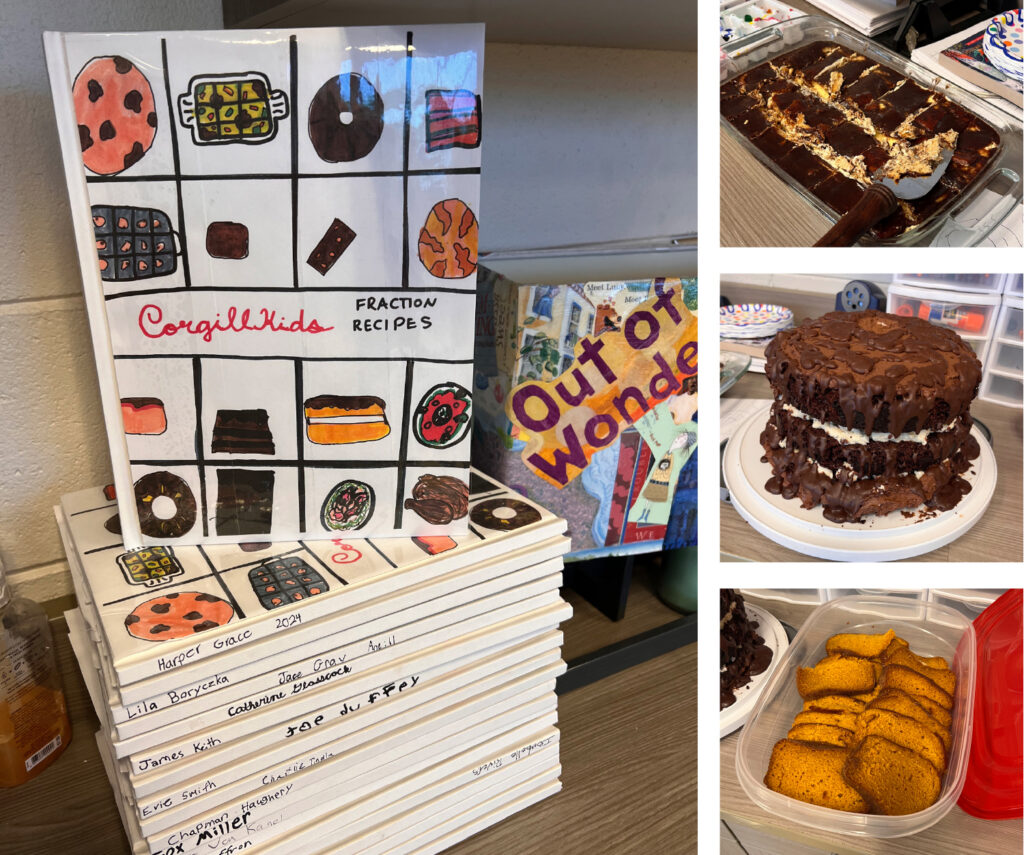
Fraction Cookbook: Writing about and Baking Our Favorite Family Recipes
Writing isn’t just for one block of time during the day. I work to create opportunities to seamlessly weave writing into all parts of our day. During our math fraction study, we were solving lots of problems that involved recipes and fractional amounts, so we decided to write our own fraction recipe book! First, the students spent time interviewing family members about favorite foods and recipes and then collected the best ones for the cookbook. The students were so excited about publishing favorite family recipes that they then wanted to bake the recipes in the cookbook. It was the most delicious writing celebration we had ever had!
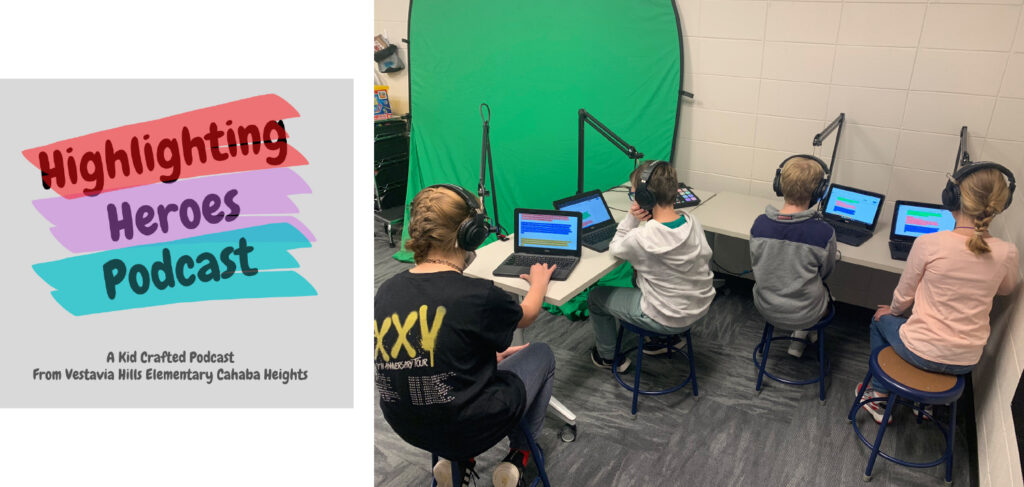
Student-Created Podcast: Sharing the Stories of Our Hometown Heroes
A few years ago, we began a kid-created podcast called Highlighting Heroes. Fourth and fifth graders met biweekly after school to brainstorm, draft scripts, interview potential guests, and publish podcasts featuring local heroes in our community. They even wrote and composed the intro music and designed the logo themselves! Talk about ownership and authenticity! It was a great way to show the world what young writers and artists can do when given the opportunity to put their ideas and creativity into script writing and podcast publishing. If you’d like to listen to a few of their episodes, you can find us here: Highlighting Heroes podcast.
Giving young writers the tools for publishing and finding ways for them to write for authentic audiences sends a powerful message to students. First, it says that their work matters, and their voices and artwork have a rightful place in the world of school and beyond. Second, providing a variety of publishing possibilities for students sends the clear message that there will always be an audience for their work and that work deserves to shine and speak to readers in powerful, colorful, and authentic ways. To write with intention and to publish with the tools that real writers and illustrators use is imperative if we are to grow young writers who write with purpose and care deeply about and feel proud of the writing work they produce.


